Dogs in World War II
The Forgotten Soldiers of the Battlefield
Jeff Davis | https://workingdogcentral.com
Long before modern tactical gear and high-tech surveillance equipment, soldiers often relied on a partner whose instincts could see, hear, and smell what humans could not. That partner walked on four legs.
During World War II, thousands of dogs served alongside Allied and Axis forces across Europe, North Africa, and the Pacific. They guarded camps, carried messages, located wounded soldiers, and warned troops of approaching enemies. In many cases, those dogs saved lives that would have otherwise been lost.
Today we call them military working dogs, but back then they were simply known as war dogs. And like any good hunting dog in the field, their value came down to instincts sharpened by training and an unbreakable bond with their handler.
The Birth of the War Dog Program
When World War II began in 1939, the United States military did not yet have a formal program for training dogs. That changed quickly after the attack on Pearl Harbor in December of 1941.
American military leaders realized that European armies—especially the Germans—had been using trained dogs for years. The U.S. needed to catch up fast.
In 1942 the U.S. Army launched the **Dogs for Defense** program, a nationwide effort that asked civilians to donate suitable dogs for military service. Families across the country responded. Within months, thousands of dogs were being evaluated for temperament, intelligence, and physical ability.
Not every dog made the cut. Military trainers were looking for animals with steady nerves, sharp senses, and the willingness to work closely with a handler. In other words, the same qualities that hunters have valued in working dogs for generations.
Many of the breeds selected would sound familiar to anyone who spends time around working dogs today. German Shepherds, Doberman Pinschers, Belgian Sheepdogs, and Collies became some of the most common military breeds. Each brought something different to the battlefield—strength, intelligence, endurance, or an uncanny ability to detect danger.
Training Dogs for War
Once selected, dogs were sent to specialized training camps across the United States. One of the most famous was located in Front Royal, Virginia.
Training a war dog was no small task.
Handlers worked with their assigned dogs daily, building trust and discipline through long hours of conditioning. Dogs learned to respond to silent hand signals, patrol quietly beside their handler, and ignore the chaos of gunfire and explosions.
Anyone who has trained a good bird dog understands the importance of that relationship. A dog must trust its handler completely. In war, that trust could mean the difference between life and death.
The training focused on several specific battlefield roles. Some dogs became sentries, guarding camps and warning troops of approaching enemies. Others were trained as messengers, capable of carrying communications across terrain that radios couldn't reach.
Then there were the scouts.
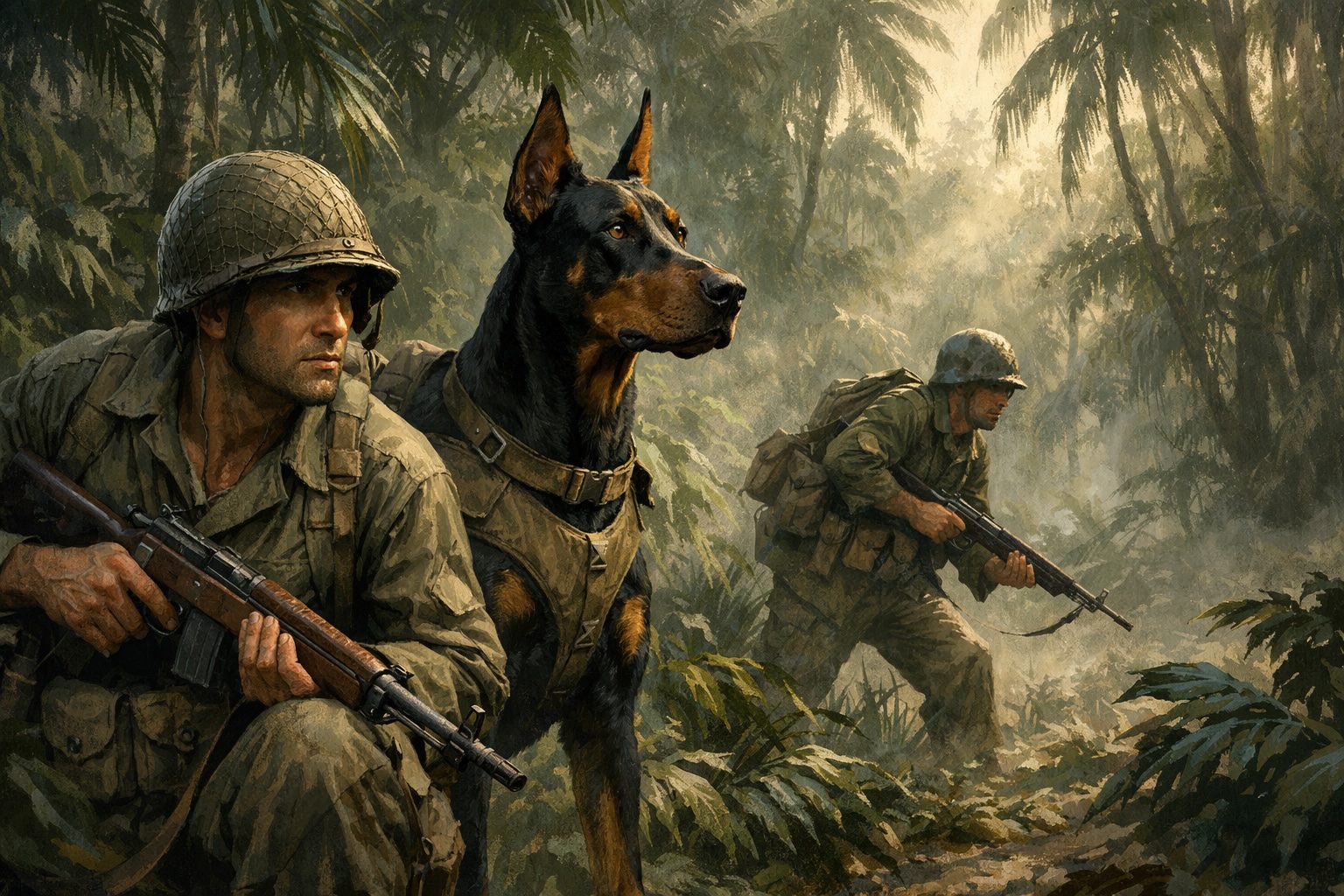
Scout dogs worked ahead of patrol units, using their superior senses to detect enemy soldiers hidden in the jungle or forests. Many soldiers credited these dogs with preventing ambushes before they ever happened.
Sentry Dogs: The Night Watchmen
One of the most valuable roles a dog played during World War II was that of the sentry.
A well-trained sentry dog could detect approaching humans long before a guard ever heard a sound. Their noses could pick up scent carried on the wind, and their ears could detect movement far beyond human capability.
At night, when visibility dropped and soldiers were at their most vulnerable, sentry dogs became the early warning system.
Handlers often described how their dogs would stiffen suddenly—ears forward, nose working the air—long before an enemy soldier came into sight. That moment of warning gave guards time to prepare defenses or alert nearby troops.
In many cases, those extra seconds prevented deadly surprise attacks.
Scout Dogs in the Pacific
While sentry dogs proved valuable everywhere, scout dogs became especially important in the Pacific theater.
The dense jungles of islands like Guam, New Guinea, and the Philippines created the perfect environment for ambush warfare. Visibility was limited, and enemy soldiers could hide just a few yards away without being seen.
Scout dogs changed that equation.
Moving quietly ahead of patrols, these dogs could smell enemy troops long before a soldier could see them. When they detected danger, they signaled their handler through subtle changes in posture or movement.
Veterans often said that scout dogs saved countless lives during jungle patrols.
Some patrol leaders even refused to leave camp without their dog teams. The dogs had proven themselves too valuable to leave behind.
Messenger Dogs and Battlefield Communication
Radio technology during World War II was not nearly as reliable as it is today. Equipment could fail, batteries could die, and terrain often interfered with signals.
Messenger dogs offered a simple solution.
These dogs were trained to run between two handlers carrying messages attached to their collars or harnesses. Unlike human runners, they could move quickly and quietly across dangerous ground.
A dog could cross open terrain under fire or navigate dense forests with remarkable speed. In some cases, messenger dogs delivered critical communications that kept units coordinated during battle.
It's easy to overlook that role today, but during the war it was a practical and dependable method of battlefield communication.
Dogs That Saved the Wounded
Some of the most remarkable stories from World War II involve dogs trained to locate wounded soldiers.
These dogs, sometimes called casualty dogs, searched battlefields for injured troops who might otherwise have been left behind.
Using scent and sound, they could locate soldiers lying wounded in thick vegetation or collapsed trenches. Once they found someone alive, the dog would return to its handler and lead medics to the injured soldier.
Many wounded men owed their survival to those dogs.
Stories circulated among soldiers about dogs crawling into bomb craters or pushing through dense brush to find men who were too weak to call for help.
Those dogs weren’t just tools of war—they were lifesavers.
The Breeds That Served
While many breeds participated in the war effort, a few stood out for their effectiveness.
German Shepherds quickly proved themselves as one of the most capable military dogs. Their intelligence, trainability, and natural protective instincts made them ideal for sentry and scout work.
Doberman Pinschers also gained recognition during the war, particularly with the U.S. Marine Corps in the Pacific. Their speed, loyalty, and alertness made them excellent patrol dogs.
Other breeds like Belgian Sheepdogs, Collies, and even mixed-breed dogs found their place in military roles. What mattered most wasn't pedigree—it was temperament, intelligence, and willingness to work with a handler.
Anyone who has hunted behind a good dog understands that truth well.
The Legacy of World War II War Dogs
By the end of World War II, thousands of dogs had served in the Allied forces alone.
Their contributions changed how militaries around the world viewed working dogs. Programs that began as wartime necessity eventually evolved into the modern military working dog units we see today.
Today's dogs serving in the armed forces—whether detecting explosives or accompanying special operations teams—owe much of their heritage to the dogs of World War II.
Those early programs proved something dog men have always known.
A well-trained dog can accomplish things no machine ever will.
Remembering the War Dogs
Many soldiers who served during World War II never forgot the dogs that worked beside them.
In letters, memoirs, and battlefield stories, those dogs are often remembered not just as equipment, but as partners.
They stood watch in the dark.
They walked patrol in dangerous places.
And when the fighting was over, many soldiers said the dog beside them was the bravest member of the unit.
For those of us who spend time in the field with working dogs—whether hunting, training, or simply watching them do what they were born to do—that kind of loyalty comes as no surprise.
Dogs have been our partners for thousands of years.
In World War II, they proved once again that they were willing to stand beside us even in humanity’s darkest hours.
During World War II, thousands of dogs served alongside Allied and Axis forces across Europe, North Africa, and the Pacific. They guarded camps, carried messages, located wounded soldiers, and warned troops of approaching enemies. In many cases, those dogs saved lives that would have otherwise been lost.
Today we call them military working dogs, but back then they were simply known as war dogs. And like any good hunting dog in the field, their value came down to instincts sharpened by training and an unbreakable bond with their handler.
The Birth of the War Dog Program
When World War II began in 1939, the United States military did not yet have a formal program for training dogs. That changed quickly after the attack on Pearl Harbor in December of 1941.
American military leaders realized that European armies—especially the Germans—had been using trained dogs for years. The U.S. needed to catch up fast.
In 1942 the U.S. Army launched the **Dogs for Defense** program, a nationwide effort that asked civilians to donate suitable dogs for military service. Families across the country responded. Within months, thousands of dogs were being evaluated for temperament, intelligence, and physical ability.
Not every dog made the cut. Military trainers were looking for animals with steady nerves, sharp senses, and the willingness to work closely with a handler. In other words, the same qualities that hunters have valued in working dogs for generations.
Many of the breeds selected would sound familiar to anyone who spends time around working dogs today. German Shepherds, Doberman Pinschers, Belgian Sheepdogs, and Collies became some of the most common military breeds. Each brought something different to the battlefield—strength, intelligence, endurance, or an uncanny ability to detect danger.
Training Dogs for War
Once selected, dogs were sent to specialized training camps across the United States. One of the most famous was located in Front Royal, Virginia.
Training a war dog was no small task.
Handlers worked with their assigned dogs daily, building trust and discipline through long hours of conditioning. Dogs learned to respond to silent hand signals, patrol quietly beside their handler, and ignore the chaos of gunfire and explosions.
Anyone who has trained a good bird dog understands the importance of that relationship. A dog must trust its handler completely. In war, that trust could mean the difference between life and death.
The training focused on several specific battlefield roles. Some dogs became sentries, guarding camps and warning troops of approaching enemies. Others were trained as messengers, capable of carrying communications across terrain that radios couldn't reach.
Then there were the scouts.
Scout dogs worked ahead of patrol units, using their superior senses to detect enemy soldiers hidden in the jungle or forests. Many soldiers credited these dogs with preventing ambushes before they ever happened.
Sentry Dogs: The Night Watchmen
One of the most valuable roles a dog played during World War II was that of the sentry.
A well-trained sentry dog could detect approaching humans long before a guard ever heard a sound. Their noses could pick up scent carried on the wind, and their ears could detect movement far beyond human capability.
At night, when visibility dropped and soldiers were at their most vulnerable, sentry dogs became the early warning system.
Handlers often described how their dogs would stiffen suddenly—ears forward, nose working the air—long before an enemy soldier came into sight. That moment of warning gave guards time to prepare defenses or alert nearby troops.
In many cases, those extra seconds prevented deadly surprise attacks.
Scout Dogs in the Pacific
While sentry dogs proved valuable everywhere, scout dogs became especially important in the Pacific theater.
The dense jungles of islands like Guam, New Guinea, and the Philippines created the perfect environment for ambush warfare. Visibility was limited, and enemy soldiers could hide just a few yards away without being seen.
Scout dogs changed that equation.
Moving quietly ahead of patrols, these dogs could smell enemy troops long before a soldier could see them. When they detected danger, they signaled their handler through subtle changes in posture or movement.
Veterans often said that scout dogs saved countless lives during jungle patrols.
Some patrol leaders even refused to leave camp without their dog teams. The dogs had proven themselves too valuable to leave behind.
Messenger Dogs and Battlefield Communication
Radio technology during World War II was not nearly as reliable as it is today. Equipment could fail, batteries could die, and terrain often interfered with signals.
Messenger dogs offered a simple solution.
These dogs were trained to run between two handlers carrying messages attached to their collars or harnesses. Unlike human runners, they could move quickly and quietly across dangerous ground.
A dog could cross open terrain under fire or navigate dense forests with remarkable speed. In some cases, messenger dogs delivered critical communications that kept units coordinated during battle.
It's easy to overlook that role today, but during the war it was a practical and dependable method of battlefield communication.
Dogs That Saved the Wounded
Some of the most remarkable stories from World War II involve dogs trained to locate wounded soldiers.
These dogs, sometimes called casualty dogs, searched battlefields for injured troops who might otherwise have been left behind.
Using scent and sound, they could locate soldiers lying wounded in thick vegetation or collapsed trenches. Once they found someone alive, the dog would return to its handler and lead medics to the injured soldier.
Many wounded men owed their survival to those dogs.
Stories circulated among soldiers about dogs crawling into bomb craters or pushing through dense brush to find men who were too weak to call for help.
Those dogs weren’t just tools of war—they were lifesavers.
The Breeds That Served
While many breeds participated in the war effort, a few stood out for their effectiveness.
German Shepherds quickly proved themselves as one of the most capable military dogs. Their intelligence, trainability, and natural protective instincts made them ideal for sentry and scout work.
Doberman Pinschers also gained recognition during the war, particularly with the U.S. Marine Corps in the Pacific. Their speed, loyalty, and alertness made them excellent patrol dogs.
Other breeds like Belgian Sheepdogs, Collies, and even mixed-breed dogs found their place in military roles. What mattered most wasn't pedigree—it was temperament, intelligence, and willingness to work with a handler.
Anyone who has hunted behind a good dog understands that truth well.
The Legacy of World War II War Dogs
By the end of World War II, thousands of dogs had served in the Allied forces alone.
Their contributions changed how militaries around the world viewed working dogs. Programs that began as wartime necessity eventually evolved into the modern military working dog units we see today.
Today's dogs serving in the armed forces—whether detecting explosives or accompanying special operations teams—owe much of their heritage to the dogs of World War II.
Those early programs proved something dog men have always known.
A well-trained dog can accomplish things no machine ever will.
Remembering the War Dogs
Many soldiers who served during World War II never forgot the dogs that worked beside them.
In letters, memoirs, and battlefield stories, those dogs are often remembered not just as equipment, but as partners.
They stood watch in the dark.
They walked patrol in dangerous places.
And when the fighting was over, many soldiers said the dog beside them was the bravest member of the unit.
For those of us who spend time in the field with working dogs—whether hunting, training, or simply watching them do what they were born to do—that kind of loyalty comes as no surprise.
Dogs have been our partners for thousands of years.
In World War II, they proved once again that they were willing to stand beside us even in humanity’s darkest hours.