Meet the Dogs Protecting Endangered Wildlife
Jeff Davis | https://workingdogcentral.com
Spend enough time around working dogs and you start to realize something most people overlook. A dog’s nose, paired with the right training and a handler who understands the craft, can solve problems that would stump an entire team of humans.
That truth has followed dogs into many fields over the years—military work, law enforcement, search and rescue, detection work. But over the past two decades, a new frontier has quietly emerged where dogs are making a real difference.
Wildlife conservation.
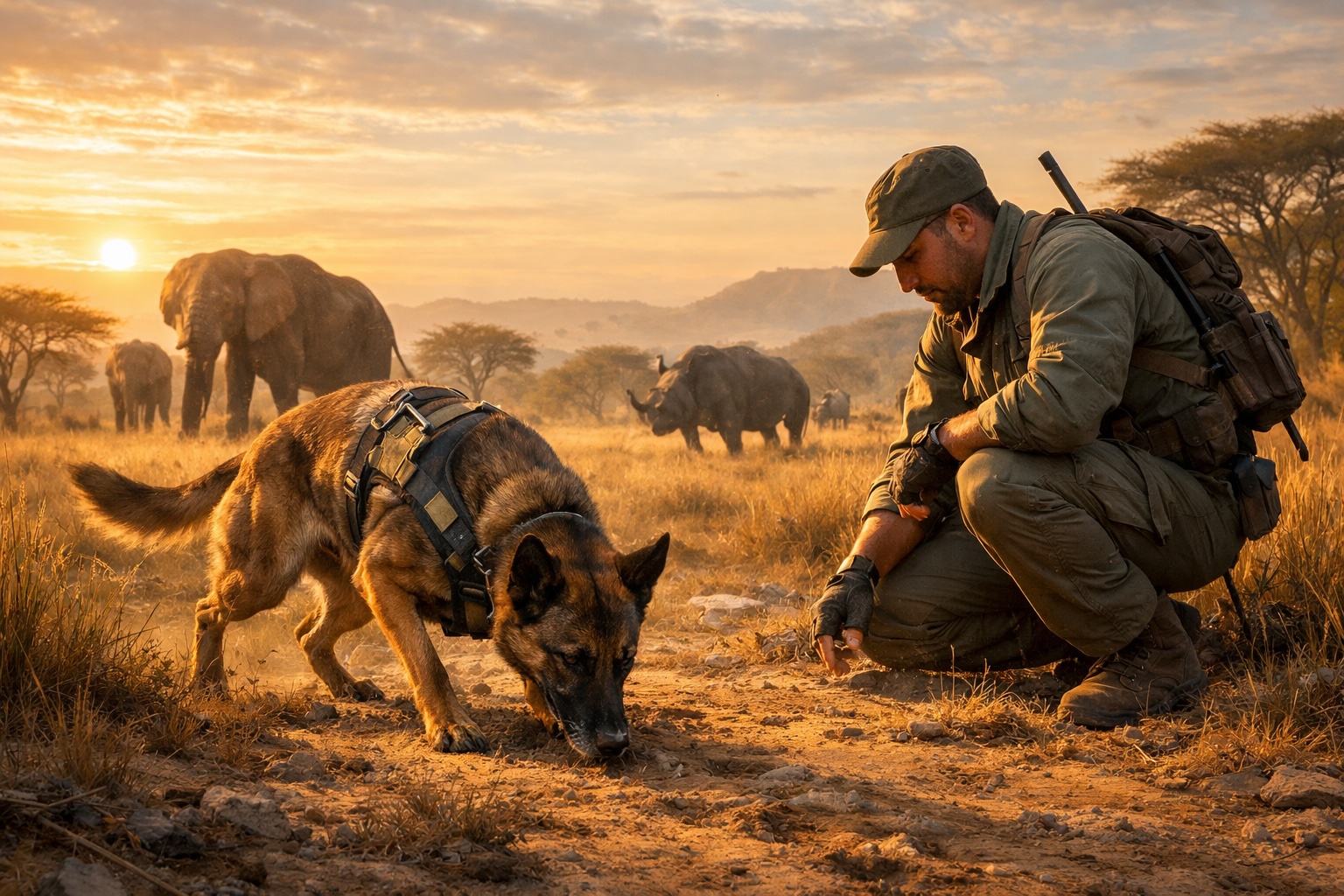
Across Africa, Asia, and North America, specialized conservation dogs are now on the front lines of protecting endangered animals. These dogs track poachers, locate illegal wildlife products, and help researchers monitor species that are nearly impossible for humans to study alone.
And like many of the best working dogs in the world, most of them started with nothing more than a powerful nose and a strong drive to work.
The Nose That Makes It Possible
Anyone who has hunted behind a good dog understands what a nose can do. Whether it's a bird dog locking up on a covey or a trailing hound working a cold track, dogs perceive scent in a way humans simply cannot.
A trained working dog can detect odors in concentrations that would never register to us. In practical terms, that means a dog can locate a hidden animal, a scat sample, or even contraband wildlife products buried deep inside cargo containers.
For conservation teams operating in massive wilderness areas, that ability is priceless.
Many endangered species are notoriously difficult to track. Snow leopards move across vast mountain terrain. Jaguars slip through dense jungle. Rhinos and elephants travel miles across savannah landscapes. Researchers trying to monitor these animals often struggle to gather enough information to protect them effectively.
This is where detection dogs come in.
By training dogs to locate scat—animal droppings—scientists can collect DNA samples that reveal population size, diet, territory ranges, and even genetic diversity. A dog that can find these samples in minutes may save researchers days or weeks of searching.
And unlike expensive technology, a dog works quietly, efficiently, and often with remarkable enthusiasm.
Anti-Poaching Dogs on the Front Lines
In parts of Africa, the role of working dogs goes beyond research. Some are trained specifically for anti-poaching patrols, helping rangers track criminals who hunt endangered animals for the illegal wildlife trade.
These dogs are often Belgian Malinois, German Shepherds, or other high-drive working breeds commonly used in military and police K9 units. Their job is to detect illegal firearms, ammunition, ivory, rhino horn, and other wildlife products being smuggled across borders.
Others are trained for tracking.
When poachers enter protected reserves, they often leave behind little evidence. But a skilled tracking dog can pick up the trail and follow it across miles of rough terrain. In many cases, these dogs help rangers locate suspects who would otherwise disappear into the wilderness.
Their presence alone has had a measurable impact. In several reserves where conservation dogs have been introduced, poaching rates have dropped significantly.
Poachers quickly learn that outrunning a trained working dog is not an easy task.
Detection Dogs in Wildlife Research
Not all conservation dogs operate in dangerous environments. Many work alongside researchers studying rare or threatened species.
In North America, conservation detection dogs are used to locate scat from wolves, grizzly bears, mountain lions, and even tiny endangered amphibians. Some dogs are trained to find invasive species that threaten delicate ecosystems.
The process is remarkably precise.
A dog trained to locate wolf scat, for example, will ignore every other animal scent in the forest and focus only on the target odor. When the dog finds a sample, it signals the handler—often by sitting or lying down near the source—so researchers can collect it for analysis.
What might take a human search team an entire day can often be accomplished by a trained dog in less than an hour.
And the dogs seem to love the work.
Most conservation dogs are selected specifically for high drive. Many are former shelter dogs that were simply too energetic for typical homes. That endless desire to hunt for scent becomes the perfect foundation for detection training.
Give a dog like that a job, and suddenly everything clicks.
A Surprising Source of Elite Working Dogs
Interestingly, some of the best conservation dogs never came from traditional working dog breeding programs.
Many organizations intentionally look for high-energy shelter dogs that might otherwise be difficult to place in homes. These dogs often display the intense play drive and focus required for scent detection work.
A tennis ball becomes their paycheck.
When the dog finds the target odor, the handler rewards them with their favorite toy. Over time, the dog learns that locating a specific scent leads to the best game in the world.
It's simple, effective, and perfectly suited to a dog’s natural instincts.
Some of these once unwanted shelter dogs have gone on to become world-class conservation detection dogs, helping protect species across multiple continents.
Protecting Wildlife at Airports and Borders
Another growing role for conservation dogs involves detecting illegal wildlife products being trafficked across international borders.
Airports, shipping ports, and border crossings have become major battlegrounds in the fight against wildlife trafficking. Illegal ivory, rhino horn, exotic skins, and even live animals are frequently smuggled through these entry points.
Specialized detection dogs are now trained to locate these items quickly.
Working alongside customs officers, the dogs inspect cargo, luggage, and shipping containers. Their noses can detect ivory hidden in sealed bags or animal products concealed inside other goods.
The speed at which these dogs work is impressive. A dog can search dozens of containers in the time it would take human inspectors to check just a few.
And when the dog sits beside a suspicious crate, handlers know they’ve likely found something worth investigating.
A Partnership Between Dogs and Conservationists
Behind every conservation dog stands a handler who understands both the science of scent work and the realities of field research.
Handlers train alongside their dogs for months before entering active programs. The bond between the two becomes critical when working in remote or dangerous environments.
Out in the bush, a dog may detect something long before the handler notices it. A subtle change in behavior—a shift in posture, a sudden focus—can signal that the dog has caught a scent.
Experienced handlers learn to read those signs the same way a hunter reads a good bird dog on point.
That partnership between human and dog is what makes these programs successful.
Technology can help researchers monitor wildlife populations, but few tools match the versatility of a trained dog.
The Future of Conservation Dogs
As conservation challenges grow around the world, the role of working dogs in wildlife protection continues to expand.
More organizations are investing in canine programs that support wildlife research, anti-poaching operations, and border inspections. Dogs are now being trained to detect everything from invasive plant species to endangered reptiles.
In many ways, this is simply the latest chapter in the long story of humans working alongside dogs.
For thousands of years, dogs have helped us hunt, guard, herd, and track. Today, that same partnership is helping protect animals that might otherwise vanish from the earth.
It’s a powerful reminder of what a good working dog can accomplish.
And in some of the most remote corners of the planet, where endangered wildlife still struggles to survive, the sound of a dog working a scent trail may be one of the most hopeful signs conservationists have.
Because sometimes the best tool for protecting wildlife… still has four legs and a nose that never quits.
That truth has followed dogs into many fields over the years—military work, law enforcement, search and rescue, detection work. But over the past two decades, a new frontier has quietly emerged where dogs are making a real difference.
Wildlife conservation.
Across Africa, Asia, and North America, specialized conservation dogs are now on the front lines of protecting endangered animals. These dogs track poachers, locate illegal wildlife products, and help researchers monitor species that are nearly impossible for humans to study alone.
And like many of the best working dogs in the world, most of them started with nothing more than a powerful nose and a strong drive to work.
The Nose That Makes It Possible
Anyone who has hunted behind a good dog understands what a nose can do. Whether it's a bird dog locking up on a covey or a trailing hound working a cold track, dogs perceive scent in a way humans simply cannot.
A trained working dog can detect odors in concentrations that would never register to us. In practical terms, that means a dog can locate a hidden animal, a scat sample, or even contraband wildlife products buried deep inside cargo containers.
For conservation teams operating in massive wilderness areas, that ability is priceless.
Many endangered species are notoriously difficult to track. Snow leopards move across vast mountain terrain. Jaguars slip through dense jungle. Rhinos and elephants travel miles across savannah landscapes. Researchers trying to monitor these animals often struggle to gather enough information to protect them effectively.
This is where detection dogs come in.
By training dogs to locate scat—animal droppings—scientists can collect DNA samples that reveal population size, diet, territory ranges, and even genetic diversity. A dog that can find these samples in minutes may save researchers days or weeks of searching.
And unlike expensive technology, a dog works quietly, efficiently, and often with remarkable enthusiasm.
Anti-Poaching Dogs on the Front Lines
In parts of Africa, the role of working dogs goes beyond research. Some are trained specifically for anti-poaching patrols, helping rangers track criminals who hunt endangered animals for the illegal wildlife trade.
These dogs are often Belgian Malinois, German Shepherds, or other high-drive working breeds commonly used in military and police K9 units. Their job is to detect illegal firearms, ammunition, ivory, rhino horn, and other wildlife products being smuggled across borders.
Others are trained for tracking.
When poachers enter protected reserves, they often leave behind little evidence. But a skilled tracking dog can pick up the trail and follow it across miles of rough terrain. In many cases, these dogs help rangers locate suspects who would otherwise disappear into the wilderness.
Their presence alone has had a measurable impact. In several reserves where conservation dogs have been introduced, poaching rates have dropped significantly.
Poachers quickly learn that outrunning a trained working dog is not an easy task.
Detection Dogs in Wildlife Research
Not all conservation dogs operate in dangerous environments. Many work alongside researchers studying rare or threatened species.
In North America, conservation detection dogs are used to locate scat from wolves, grizzly bears, mountain lions, and even tiny endangered amphibians. Some dogs are trained to find invasive species that threaten delicate ecosystems.
The process is remarkably precise.
A dog trained to locate wolf scat, for example, will ignore every other animal scent in the forest and focus only on the target odor. When the dog finds a sample, it signals the handler—often by sitting or lying down near the source—so researchers can collect it for analysis.
What might take a human search team an entire day can often be accomplished by a trained dog in less than an hour.
And the dogs seem to love the work.
Most conservation dogs are selected specifically for high drive. Many are former shelter dogs that were simply too energetic for typical homes. That endless desire to hunt for scent becomes the perfect foundation for detection training.
Give a dog like that a job, and suddenly everything clicks.
A Surprising Source of Elite Working Dogs
Interestingly, some of the best conservation dogs never came from traditional working dog breeding programs.
Many organizations intentionally look for high-energy shelter dogs that might otherwise be difficult to place in homes. These dogs often display the intense play drive and focus required for scent detection work.
A tennis ball becomes their paycheck.
When the dog finds the target odor, the handler rewards them with their favorite toy. Over time, the dog learns that locating a specific scent leads to the best game in the world.
It's simple, effective, and perfectly suited to a dog’s natural instincts.
Some of these once unwanted shelter dogs have gone on to become world-class conservation detection dogs, helping protect species across multiple continents.
Protecting Wildlife at Airports and Borders
Another growing role for conservation dogs involves detecting illegal wildlife products being trafficked across international borders.
Airports, shipping ports, and border crossings have become major battlegrounds in the fight against wildlife trafficking. Illegal ivory, rhino horn, exotic skins, and even live animals are frequently smuggled through these entry points.
Specialized detection dogs are now trained to locate these items quickly.
Working alongside customs officers, the dogs inspect cargo, luggage, and shipping containers. Their noses can detect ivory hidden in sealed bags or animal products concealed inside other goods.
The speed at which these dogs work is impressive. A dog can search dozens of containers in the time it would take human inspectors to check just a few.
And when the dog sits beside a suspicious crate, handlers know they’ve likely found something worth investigating.
A Partnership Between Dogs and Conservationists
Behind every conservation dog stands a handler who understands both the science of scent work and the realities of field research.
Handlers train alongside their dogs for months before entering active programs. The bond between the two becomes critical when working in remote or dangerous environments.
Out in the bush, a dog may detect something long before the handler notices it. A subtle change in behavior—a shift in posture, a sudden focus—can signal that the dog has caught a scent.
Experienced handlers learn to read those signs the same way a hunter reads a good bird dog on point.
That partnership between human and dog is what makes these programs successful.
Technology can help researchers monitor wildlife populations, but few tools match the versatility of a trained dog.
The Future of Conservation Dogs
As conservation challenges grow around the world, the role of working dogs in wildlife protection continues to expand.
More organizations are investing in canine programs that support wildlife research, anti-poaching operations, and border inspections. Dogs are now being trained to detect everything from invasive plant species to endangered reptiles.
In many ways, this is simply the latest chapter in the long story of humans working alongside dogs.
For thousands of years, dogs have helped us hunt, guard, herd, and track. Today, that same partnership is helping protect animals that might otherwise vanish from the earth.
It’s a powerful reminder of what a good working dog can accomplish.
And in some of the most remote corners of the planet, where endangered wildlife still struggles to survive, the sound of a dog working a scent trail may be one of the most hopeful signs conservationists have.
Because sometimes the best tool for protecting wildlife… still has four legs and a nose that never quits.