German Shepherds in Law Enforcement
The Dog That Built the Modern Police K9
Jeff Davis | https://workingdogcentral.com
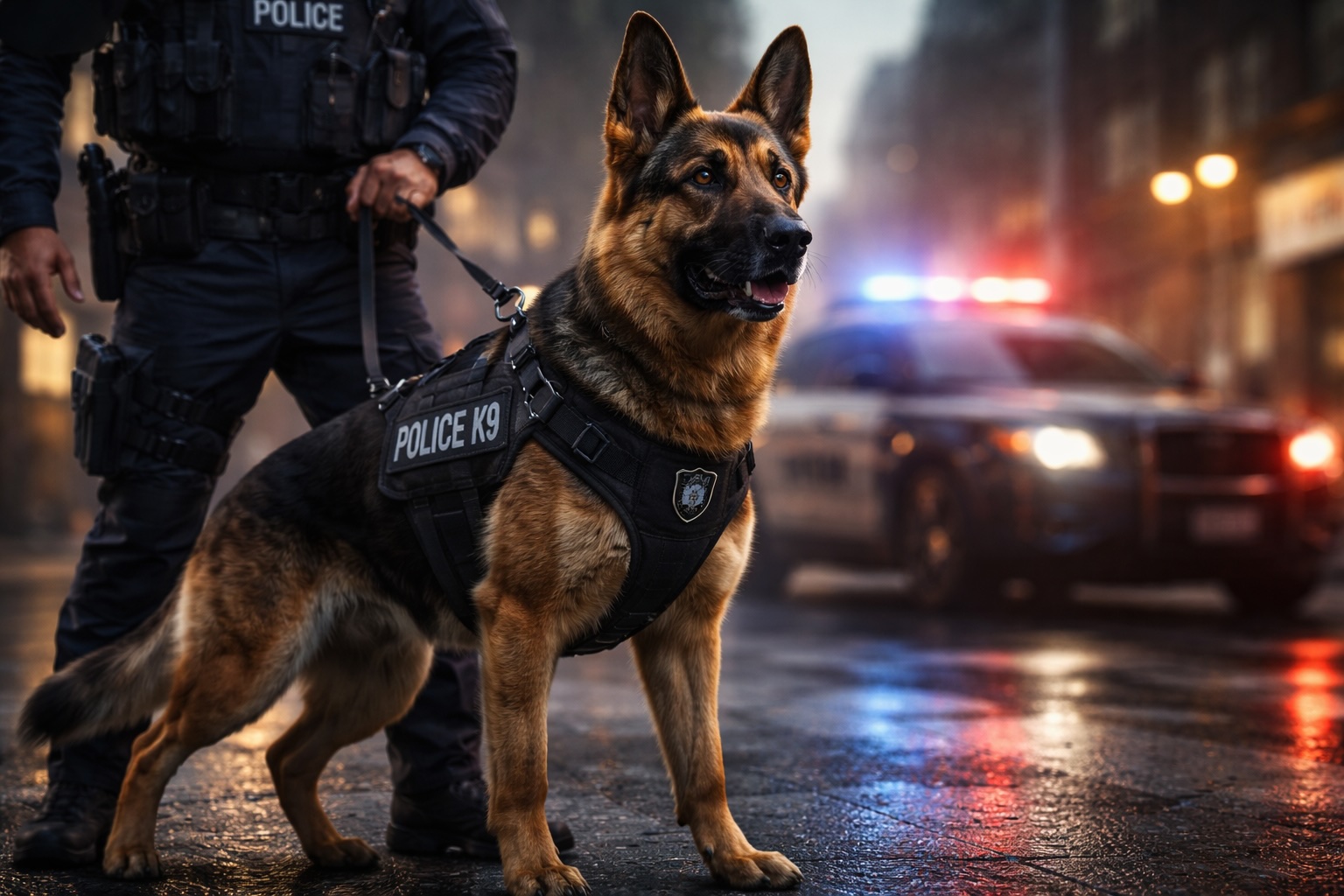
Long before the term police K9 unit became common language, the German Shepherd was already proving itself as one of the most capable working dogs the world had ever seen. If you spend any time around working dog handlers or trainers, you quickly learn that this breed didn’t just participate in law enforcement work — in many ways, it helped define it.
The German Shepherd is one of those rare breeds that seems almost purpose-built for demanding jobs. Strong but athletic. Intelligent but steady. Driven but controlled. Those qualities didn’t appear by accident. They were carefully cultivated over generations of selective breeding that prioritized working ability above all else.
Today, whether you’re watching a police unit search a building, track a suspect across rough terrain, or detect narcotics hidden in a vehicle, chances are good that a German Shepherd is involved somewhere in the operation.
A Breed Born for Work
To understand why German Shepherds became so dominant in law enforcement, you have to start with the origins of the breed itself.
The German Shepherd traces back to late 19th century Germany, when cavalry officer Max von Stephanitz set out to create the ideal working dog. His goal wasn’t beauty or show-ring standards. He wanted a dog with intelligence, endurance, loyalty, and the ability to follow commands with precision.
In other words, he wanted a worker.
Early German Shepherds were developed as herding dogs, managing flocks across the countryside while responding instantly to their handler’s commands. That kind of work demanded both brains and stamina. A dog had to think independently yet remain obedient. It had to move quickly across rough ground and stay focused for long periods of time.
Those same traits that made them exceptional herding dogs would later make them perfect candidates for police work.
The Birth of the Police K9
Germany was the first country to formally recognize the German Shepherd’s potential in law enforcement. By the early 1900s, German police departments had begun training the dogs for patrol work, tracking, and suspect apprehension.
What they discovered was remarkable.
These dogs possessed an uncanny ability to follow scent trails over long distances. Their confidence allowed them to pursue suspects into dark buildings or unfamiliar environments. Perhaps most importantly, they could be trained to work under pressure without losing focus.
Other countries took notice.
By the time World War I ended, German Shepherds had already gained a reputation as exceptional military and service dogs. When soldiers returned home, many brought stories of the breed’s intelligence and bravery with them.
Before long, police departments in the United States, the United Kingdom, and other countries began building their own K9 programs around German Shepherds.
Intelligence That Makes the Difference
Spend enough time around working German Shepherds and you begin to appreciate something unique about them. These dogs aren’t just obedient — they’re thinkers.
A good police K9 handler will tell you that a German Shepherd is constantly reading the environment. They watch body language. They listen for subtle cues. They anticipate what might happen next.
That kind of intelligence is invaluable in law enforcement work.
When tracking a suspect, a dog must follow scent that may be hours old while ignoring countless distractions. When searching a vehicle for narcotics or explosives, the dog must remain focused despite noise, movement, and unfamiliar smells.
A lesser dog might get overwhelmed.
A German Shepherd locks in and goes to work.
Their ability to learn complex tasks also allows trainers to develop specialized skills. Some police K9s focus on narcotics detection. Others are trained for explosives detection, search and rescue, or patrol duties that involve suspect apprehension.
Many German Shepherds are trained to perform multiple roles, making them incredibly versatile partners for their handlers.
The Bond Between Handler and Dog
Anyone who has spent time around police K9 teams knows that the relationship between handler and dog runs deeper than a typical working partnership.
These dogs live with their handlers. They ride in patrol cars together. They train together nearly every day.
Over time, a bond forms that goes far beyond simple obedience.
A skilled handler learns to read their dog’s behavior the same way a hunter reads his bird dog in the field. A slight change in posture, a subtle shift in breathing, or the way a dog’s ears move can reveal important information.
Maybe the dog has picked up a faint scent trail.
Maybe something isn’t quite right in a room being searched.
Those small signals are often the difference between success and failure during real-world operations.
And a German Shepherd, with its natural attentiveness and loyalty, forms that kind of partnership exceptionally well.
Courage Under Pressure
Law enforcement work isn’t easy, and it certainly isn’t safe.
Police K9s are often sent into situations where human officers would face serious danger. Searching dark warehouses. Pursuing armed suspects. Entering buildings where visibility is limited and threats may be hiding.
In those moments, a police dog must have the confidence to push forward without hesitation.
German Shepherds have proven time and again that they possess exactly that kind of courage.
They are naturally protective of their handlers and have a strong defensive instinct that can be directed through proper training. Yet they also maintain control, responding instantly to commands when a situation changes.
That balance between drive and discipline is one of the reasons the breed has remained a cornerstone of law enforcement for so many years.
Detection Work and Modern K9 Roles
While German Shepherds are often associated with patrol work and suspect apprehension, their abilities extend far beyond those roles.
Many modern police departments rely on German Shepherds for detection tasks. These dogs are capable of locating narcotics, explosives, firearms, and even digital storage devices in some specialized programs.
Their noses are incredibly sensitive, allowing them to detect trace amounts of scent that humans could never perceive.
In busy airports, crowded public events, and high-security facilities, detection dogs quietly perform work that keeps people safe without most of the public ever realizing it.
A handler may walk through a crowd with a German Shepherd at heel, appearing calm and routine. Meanwhile, the dog is actively scanning the environment, sorting through thousands of scent particles in search of a specific odor.
When the dog finds what it’s been trained to detect, the change in behavior can be subtle — a sit, a pause, or focused attention on a particular bag or vehicle.
Those moments often mark the beginning of a successful investigation.
The Rise of Other Police Breeds
In recent years, other breeds — particularly the Belgian Malinois — have become increasingly popular in military and law enforcement roles. Their lighter frame and extreme drive make them well-suited for certain specialized tasks.
Yet despite the rise of these newer working breeds, the German Shepherd remains one of the most widely used police dogs in the world.
Departments continue to rely on them for patrol work, detection, and tracking. Their stability and trainability make them dependable partners for handlers across a wide range of assignments.
In many ways, the German Shepherd set the blueprint for what a police dog should be.
A Legacy That Continues
More than a century after the first police departments began experimenting with K9 units, the German Shepherd still stands as one of the most respected working dogs on the planet.
You’ll find them working city streets, guarding borders, searching disaster zones, and helping officers locate suspects who thought they had disappeared.
It’s not just their strength or their intelligence that makes them special.
It’s their willingness to work alongside humans, to follow commands under pressure, and to give everything they have in the service of the job.
For generations of law enforcement officers, the German Shepherd has been more than a tool. It has been a partner.
And in the world of working dogs, that partnership is what truly defines the breed.
The German Shepherd is one of those rare breeds that seems almost purpose-built for demanding jobs. Strong but athletic. Intelligent but steady. Driven but controlled. Those qualities didn’t appear by accident. They were carefully cultivated over generations of selective breeding that prioritized working ability above all else.
Today, whether you’re watching a police unit search a building, track a suspect across rough terrain, or detect narcotics hidden in a vehicle, chances are good that a German Shepherd is involved somewhere in the operation.
A Breed Born for Work
To understand why German Shepherds became so dominant in law enforcement, you have to start with the origins of the breed itself.
The German Shepherd traces back to late 19th century Germany, when cavalry officer Max von Stephanitz set out to create the ideal working dog. His goal wasn’t beauty or show-ring standards. He wanted a dog with intelligence, endurance, loyalty, and the ability to follow commands with precision.
In other words, he wanted a worker.
Early German Shepherds were developed as herding dogs, managing flocks across the countryside while responding instantly to their handler’s commands. That kind of work demanded both brains and stamina. A dog had to think independently yet remain obedient. It had to move quickly across rough ground and stay focused for long periods of time.
Those same traits that made them exceptional herding dogs would later make them perfect candidates for police work.
The Birth of the Police K9
Germany was the first country to formally recognize the German Shepherd’s potential in law enforcement. By the early 1900s, German police departments had begun training the dogs for patrol work, tracking, and suspect apprehension.
What they discovered was remarkable.
These dogs possessed an uncanny ability to follow scent trails over long distances. Their confidence allowed them to pursue suspects into dark buildings or unfamiliar environments. Perhaps most importantly, they could be trained to work under pressure without losing focus.
Other countries took notice.
By the time World War I ended, German Shepherds had already gained a reputation as exceptional military and service dogs. When soldiers returned home, many brought stories of the breed’s intelligence and bravery with them.
Before long, police departments in the United States, the United Kingdom, and other countries began building their own K9 programs around German Shepherds.
Intelligence That Makes the Difference
Spend enough time around working German Shepherds and you begin to appreciate something unique about them. These dogs aren’t just obedient — they’re thinkers.
A good police K9 handler will tell you that a German Shepherd is constantly reading the environment. They watch body language. They listen for subtle cues. They anticipate what might happen next.
That kind of intelligence is invaluable in law enforcement work.
When tracking a suspect, a dog must follow scent that may be hours old while ignoring countless distractions. When searching a vehicle for narcotics or explosives, the dog must remain focused despite noise, movement, and unfamiliar smells.
A lesser dog might get overwhelmed.
A German Shepherd locks in and goes to work.
Their ability to learn complex tasks also allows trainers to develop specialized skills. Some police K9s focus on narcotics detection. Others are trained for explosives detection, search and rescue, or patrol duties that involve suspect apprehension.
Many German Shepherds are trained to perform multiple roles, making them incredibly versatile partners for their handlers.
The Bond Between Handler and Dog
Anyone who has spent time around police K9 teams knows that the relationship between handler and dog runs deeper than a typical working partnership.
These dogs live with their handlers. They ride in patrol cars together. They train together nearly every day.
Over time, a bond forms that goes far beyond simple obedience.
A skilled handler learns to read their dog’s behavior the same way a hunter reads his bird dog in the field. A slight change in posture, a subtle shift in breathing, or the way a dog’s ears move can reveal important information.
Maybe the dog has picked up a faint scent trail.
Maybe something isn’t quite right in a room being searched.
Those small signals are often the difference between success and failure during real-world operations.
And a German Shepherd, with its natural attentiveness and loyalty, forms that kind of partnership exceptionally well.
Courage Under Pressure
Law enforcement work isn’t easy, and it certainly isn’t safe.
Police K9s are often sent into situations where human officers would face serious danger. Searching dark warehouses. Pursuing armed suspects. Entering buildings where visibility is limited and threats may be hiding.
In those moments, a police dog must have the confidence to push forward without hesitation.
German Shepherds have proven time and again that they possess exactly that kind of courage.
They are naturally protective of their handlers and have a strong defensive instinct that can be directed through proper training. Yet they also maintain control, responding instantly to commands when a situation changes.
That balance between drive and discipline is one of the reasons the breed has remained a cornerstone of law enforcement for so many years.
Detection Work and Modern K9 Roles
While German Shepherds are often associated with patrol work and suspect apprehension, their abilities extend far beyond those roles.
Many modern police departments rely on German Shepherds for detection tasks. These dogs are capable of locating narcotics, explosives, firearms, and even digital storage devices in some specialized programs.
Their noses are incredibly sensitive, allowing them to detect trace amounts of scent that humans could never perceive.
In busy airports, crowded public events, and high-security facilities, detection dogs quietly perform work that keeps people safe without most of the public ever realizing it.
A handler may walk through a crowd with a German Shepherd at heel, appearing calm and routine. Meanwhile, the dog is actively scanning the environment, sorting through thousands of scent particles in search of a specific odor.
When the dog finds what it’s been trained to detect, the change in behavior can be subtle — a sit, a pause, or focused attention on a particular bag or vehicle.
Those moments often mark the beginning of a successful investigation.
The Rise of Other Police Breeds
In recent years, other breeds — particularly the Belgian Malinois — have become increasingly popular in military and law enforcement roles. Their lighter frame and extreme drive make them well-suited for certain specialized tasks.
Yet despite the rise of these newer working breeds, the German Shepherd remains one of the most widely used police dogs in the world.
Departments continue to rely on them for patrol work, detection, and tracking. Their stability and trainability make them dependable partners for handlers across a wide range of assignments.
In many ways, the German Shepherd set the blueprint for what a police dog should be.
A Legacy That Continues
More than a century after the first police departments began experimenting with K9 units, the German Shepherd still stands as one of the most respected working dogs on the planet.
You’ll find them working city streets, guarding borders, searching disaster zones, and helping officers locate suspects who thought they had disappeared.
It’s not just their strength or their intelligence that makes them special.
It’s their willingness to work alongside humans, to follow commands under pressure, and to give everything they have in the service of the job.
For generations of law enforcement officers, the German Shepherd has been more than a tool. It has been a partner.
And in the world of working dogs, that partnership is what truly defines the breed.